Email marketing always goes to the spam folder? You may be overlooking the IP issue
Many teams doing EDM have encountered this situation: well-designed email templates, accurate subscriber lists, but after sending a stone sinking into the sea. The problem may lie inThe sending source IP is marked as a spam source. When a large number of emails are sent from the same IP, the defense mechanism of mailbox service provider will automatically intercept them, and directly block the IP in serious cases.
Why Residential IP Rotation Breaks the Mold
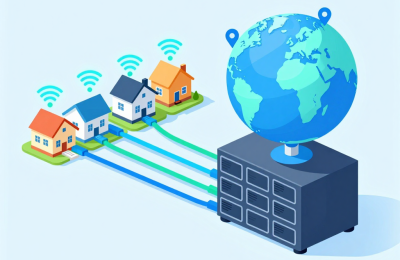
Unlike server room IPs, which are easily recognized as commercialResidential IP derived from real home network, has three natural advantages:
- High trust: Dynamic IPs assigned by ISP carriers come with a reputation endorsement
- Fragmented distribution: rotating IP across regions to avoid concentration risk
- Behavioral simulation: simulate the real user network environment to send emails
Using ipipgo's 90 million+ residential IP resources, each send automatically switches to a different country/region IP, so that each email looks like it is sent from an ordinary user's computer.
Dynamic rotation ≠ mindless switching These are the details to keep in mind
- frequency control: switching 3-5 IPs per hour is more consistent with normal user behavior than switching every minute
- Geographic matching: Prioritize U.S. home IPs for email to U.S. users
- protocol adaptation:SMTP/POP3/IMAP多协议支持,根据邮件服务器类型选择
- black and white list: Automatically exclude IP segments flagged by anti-spam organizations
Test Comparison: Residential IP vs Conventional Program
| Type of program | delivery rate | Risk of blocking | cost-effectiveness |
|---|---|---|---|
| Build Your Own Server | ≤40% | extremely high | High O&M costs |
| Common room agent | 55%-65% | mid-to-high | Requires frequent replacement |
| ipipgo Residential IP | ≥92% | lower (one's head) | call |
Four Hands-On Suggestions to Improve Success
1. Warming up the IP pool: Send low-frequency regular emails to newly acquired IPs first.
2. Content de-duplication: Avoid sending the same content multiple times with the same IP
3. time interval distribution: Sent in conjunction with work/rest hours in the target time zone
4. anomaly monitoring: Setting the bounce rate to exceed 151 TP3T automatically deactivates the current IP
Frequently Asked Questions QA
Q: How to choose between static IP and dynamic IP?
A: Large-scale mass mailing with dynamic rotation, important customer reach available static residential IP to establish long-term trust.
Q: What should I do if my IP is suddenly blocked?
A: Immediate switching ipipgo offersEmergency IP PoolThe system will automatically isolate the problem IP and replenish new resources.
Q: How do I verify IP quality?
A: via ipipgo'sIP Reputation CheckerThe IP is blacklisted in real time.
Why choose ipipgo?
As a professional platform focusing on proxy IP services, ipipgo's residential IP library covers 240+ countries and regions around the world, and the uniqueIntelligent temperature control systemCan automatically match to your sending scenarios:
- Automated "cold start" process for new IPs
- High Reputation IP Smart Extended Life Cycle
- Real-time cutoff of abnormal traffic to protect resource pools
Whether you're a startup team or a large organization, there's a solution to fit.

 English
  简体中文
简体中文  Español
  Deutsch
  Français