How the U.S. Socks5 agent to solve the New York Stock Exchange API high-frequency call problem
Recently, a friend who does quantitative trading of U.S. stocks approached me to complain, saying that the strategy system developed by their team is always restricted by the New York Stock Exchange API to limit the number of requests. This is actually quite common in the financial circle, especially the main high-frequency trading, or will be officially pulled into the dark room. Today we will talk about how to use the proxy IP to break this situation.
Why is the Socks5 protocol better suited for high-frequency calls?
Let's start with a real case: last year, a private equity with HTTP proxy to engage in API calls, the results of continuous triggering of the wind control mechanism, the account was almost frozen. The problem lies in the HTTP protocol features are too obvious, the exchange monitoring system can be recognized in minutes.
That's when it's time toSocks5 ProxyOn to the show. This thing has three great tricks:
| hallmark | dominance |
|---|---|
| Multi-protocol support | Ability to handle all HTTP/HTTPS/FTP traffic |
| seamless transmission | Does not modify packet header information |
| UDP support | Especially suited for real-time data streaming |
Four Steps to Real-World Configuration
Here's an example of ipipgo's Residential Proxy in hand to show you how to deploy it:
- Created in the ipipgo backendDynamic residential agent poolSelect U.S. Node
- Configure the authentication method (recommended whitelisting IP binding)
- Set the proxy parameters in the code:
proxies = { 'http': 'socks5://user:pass@gateway.ipipgo.com:24000', 'https': 'socks5://user:pass@gateway.ipipgo.com:24000' } - Add a middleware that automatically switches IPs, it is recommended to change them every 5-10 minutes
High Frequency Calling Anti-Blocking Essentials
Don't think that everything will be fine if you hang up your agent, these are a few pits you should avoid:
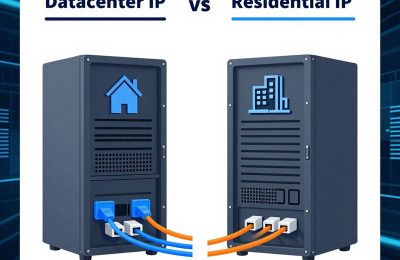
- Don't use the data center IP(The exchange loves to block these.)
- The frequency of requests from a single IP is controlled toWithin 30 beats per minute
- 记得模拟正常用户行为,随机加点0.5-2秒的
- Update 1/3 of the IP pool every week (ipipgo's auto-refresh feature works just fine)
Frequently Asked Questions QA
Q: Why is it better to use ipipgo's proxy than to build my own server?
A: Self-built IPs are easily recognized as server room IPs. ipipgo's residential proxies are real home broadband, and the trading system is more difficult to detect.
Q: What should I do if I encounter slow API response?
A:先检查代理,ipipgo后台有实时测速工具。如果个别节点高,在控制台手动切换服务区域。
Q: How to handle the need to call multiple exchange APIs at the same time?
A: It is recommended to create multiple proxy sub-accounts and assign independent IP segments to each exchange. ipipgo supports the separation of sub-account privileges for easy management.
Finally, a cold knowledge: the New York Stock Exchange's API wind control system at 3:00 a.m. (U.S. Eastern Time) will reset some of the counters, a reasonable arrangement of the call time can be twice as effective. If you are still worried about API limitations, you may want to try ipipgo'sFinancial Customized Agent Program, their technical customer service can help with specialized traffic scheduling optimization.

 English
  简体中文
简体中文  Español
  Deutsch
  Français